Business communication has changed significantly. Employees no longer work exclusively from desks inside one office. Customers expect faster answers, teams collaborate across locations, and conversations increasingly move between phone calls, messaging platforms, video meetings, websites, and customer relationship management systems.
However, many organisations still depend on traditional PBX systems designed primarily to connect office desk phones.
The issue is not that every existing PBX must be replaced immediately. The more important question is whether the current system still supports how the organisation’s employees and customers communicate in 2026.
For businesses in Egypt, upgrading to a modern IP PBX and unified communications platform can help bring voice, collaboration, customer service, and remote access into a more manageable environment.
The Problem: Business Communication Has Become Disconnected
Many businesses gradually adopt new communication tools without replacing or integrating their original phone system.
The organisation may use a traditional PBX for calls, a separate video-conferencing service for meetings, personal mobile phones for remote employees, messaging applications for internal discussions, and another platform for customer-service records.
Each tool may solve one immediate problem, but the overall environment becomes fragmented.
Employees Work Across Different Locations
Hybrid and remote employees need access to business communications outside the office. When the PBX is tied primarily to physical extensions, staff may rely on call forwarding or personal mobile numbers.
This can make it more difficult to maintain a consistent business identity, control call routing, access company contacts, or transfer customer calls between colleagues.
Customer Enquiries Arrive Through Multiple Channels
Customers do not always begin their journey with a phone call. They may use a website chat, WhatsApp, Facebook, SMS, email, or another digital channel.
When each channel is handled separately, employees must move between applications to find messages and customer information. Conversations can be duplicated, delayed, or missed entirely.
Customer Response Times Become Difficult to Control
A basic PBX can distribute calls, but growing customer-service teams usually need greater visibility.
Managers may need to understand how many callers are waiting, which agents are available, how many calls were abandoned, and whether enquiries are being routed to the appropriate department.
Without queues, performance dashboards, reports, intelligent routing, and supervisor tools, improving response time becomes difficult.
Why Traditional PBX Is No Longer Enough
Traditional PBX systems were generally designed around a predictable model: employees worked from one office, each person had a desk phone, and most customer interactions happened through voice calls.
Modern businesses operate differently.
| Business requirement | Traditional PBX limitation | Modern requirement |
|---|---|---|
| Hybrid work | Extensions tied to office phones | Secure access from desktop, web, and mobile |
| Multiple branches | Separate systems and complex routing | Centralised or interconnected communication |
| Customer service | Basic call distribution | Queues, reporting, monitoring, and intelligent routing |
| Digital channels | Voice-focused communication | Voice, messaging, chat, and video |
| Business applications | Limited integration | CRM, helpdesk, and productivity-platform integration |
| Growth | Hardware-dependent expansion | Flexible users, extensions, and deployment models |
Limited Support for Remote Teams
Call forwarding can send office calls to mobile phones, but it does not necessarily provide employees with the full office communication experience.
Remote staff may still lack company presence information, central contact directories, call recording access, internal chat, easy transfers, or the ability to move a live call between devices.
Voice Alone Does Not Meet Every Customer Expectation
Traditional telephony remains important, particularly for urgent support, sales enquiries, reservations, and service requests. However, voice is now one part of a wider customer communication environment.
A modern system should help employees manage conversations without repeatedly switching between disconnected tools.
Management Becomes More Complicated as the Business Grows
Adding users, branches, call queues, remote workers, or customer-service teams to a legacy PBX may require additional hardware, specialist configuration, and separate software.
This can increase the workload for IT teams and make the communication environment more difficult to monitor.
Modern platforms provide web-based administration, user permissions, graphical dashboards, auto-provisioning, event logs, backup functions, APIs, security controls, and centralised management options. The exact capabilities depend on the Yeastar edition and plan selected.
Yeastar P-Series
Yeastar P-Series is a modern business phone and unified communications platform available through appliance, software, cloud, hosted, and self-hosted deployment approaches.
Rather than treating telephony as an isolated system, it connects voice communication with collaboration, customer service, remote access, reporting, and business applications.
Unified Communication in One Environment
The P-Series combines business calling with functions such as:
- Audio and video conferencing
- Team chat and file sharing
- Presence information
- Company and personal contacts
- Voicemail and call recordings
- Operator and call-management panels
- CRM and helpdesk integrations
Employees can access these capabilities through the Linkus interface instead of relying on unrelated communication applications.
Integrated Call Center Features
Yeastar P-Series includes call-center capabilities that help businesses organise incoming enquiries and supervise service performance.
Depending on the plan and deployment, these can include Automatic Call Distribution, multilevel IVR, queues, skill-based routing, priority routing, queue callbacks, call recording, agent coaching, wallboards, call dispositions, monitoring, reports, and supervisor tools.
These functions can support customer-service departments without requiring the organisation to operate a completely separate basic call-center platform.
Mobile and Remote Access
Linkus can turn an employee’s computer or smartphone into a business extension.
Employees can remain reachable through the company phone system while working from home, travelling, visiting a customer, or operating from another branch. They do not need to publish their personal mobile numbers for normal business communication.
Remote Access Service is available for applicable appliance and software deployments, while cloud deployments are inherently designed for remote availability. Licensing, network configuration, security requirements, and available functions should be assessed during deployment.
Flexible Scalability and Deployment
Businesses do not all require the same PBX architecture.
An organisation may prefer an on-premises appliance for local control, a software deployment on its own infrastructure, or a cloud-based model that reduces dependence on office hardware.
The ProVAD Yeastar portfolio includes P-Series appliances for different organisation sizes, including the P520, P550, P560, and P570. Current model capacities range from smaller deployments to configurations supporting hundreds of users, depending on the appliance, plan, expansion, and concurrent-call requirements.
Click here to discover more about Yeastar IP PBX.
Integration with Existing Business Applications
Communication becomes more useful when connected to the platforms employees already use.
Yeastar supports integrations with Microsoft applications and selected CRM, helpdesk, hotel-management, and business platforms. Linkus currently lists integrations involving platforms such as Microsoft Teams, Outlook, HubSpot, Salesforce, Zoho, Bitrix24, Odoo, Zendesk, and Zoho Desk. Compatibility and licensing should be confirmed for each deployment.
Which Yeastar P-Series Model Is Right for Your Business?
Yeastar offers four P-Series appliance models for organisations with different user capacities, call volumes, connectivity requirements, and expansion plans.
The following comparison can help businesses identify the most appropriate starting point. Final selection should also consider SIP trunks, analogue lines, call-centre requirements, integrations, redundancy, recording storage, and expected growth.
Which Yeastar P-Series Model Fits Your Business?
Compare user capacity, concurrent calls and telephony interfaces to identify the most suitable IP PBX appliance for your current requirements and expected growth.
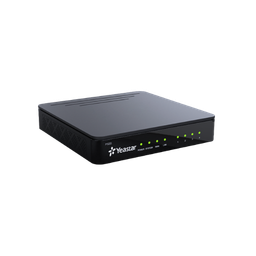
P520
Compact communications platform for smaller organisations.
- Users 20
- Concurrent calls 10
- Maximum FXS ports 4
- Maximum FXO/BRI ports 4
- Maximum 3G/4G ports 1
- E1/T1/J1 support No
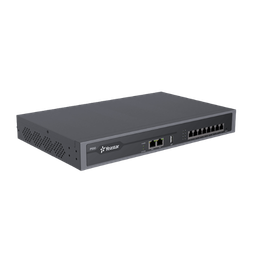
P550
Greater call capacity for established and growing SMEs.
- Users 50
- Concurrent calls 25
- Maximum FXS ports 8
- Maximum FXO/BRI ports 8
- Maximum 3G/4G ports 4
- E1/T1/J1 support No
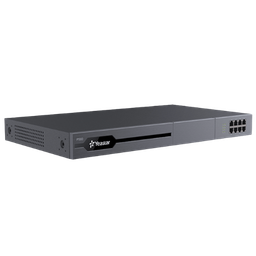
P560
Expandable capacity for medium-sized and multi-site businesses.
- Users (base / maximum) 100 / 200
- Calls (base / maximum) 30 / 60
- Maximum FXS ports 8
- Maximum FXO/BRI ports 8
- Maximum 3G/4G ports 4
- Maximum E1/T1/J1 ports 1
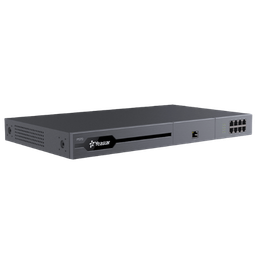
P570
High-capacity communications for larger organisations.
- Users (base / maximum) 300 / 500
- Calls (base / maximum) 60 / 120
- Maximum FXS ports 16
- Maximum FXO/BRI ports 16
- Maximum 3G/4G ports 6
- Maximum E1/T1/J1 ports 2
Not Sure Which P-Series Model You Need?
ProVAD can help assess your number of users, concurrent calls, telephony interfaces, call-centre requirements, integrations and expected business growth.
Contact UsWhich Yeastar P-Series Model Fits Your Business?
Compare user capacity, concurrent calls and telephony interfaces to identify the most suitable IP PBX appliance for your current requirements and expected growth.
P520
Compact communications platform for smaller organisations.
- Users 20
- Concurrent calls 10
- Maximum FXS ports 4
- Maximum FXO/BRI ports 4
- Maximum 3G/4G ports 1
- E1/T1/J1 support No
P550
Greater call capacity for established and growing SMEs.
- Users 50
- Concurrent calls 25
- Maximum FXS ports 8
- Maximum FXO/BRI ports 8
- Maximum 3G/4G ports 4
- E1/T1/J1 support No
P560
Expandable capacity for medium-sized and multi-site businesses.
- Users (base / maximum) 100 / 200
- Calls (base / maximum) 30 / 60
- Maximum FXS ports 8
- Maximum FXO/BRI ports 8
- Maximum 3G/4G ports 4
- Maximum E1/T1/J1 ports 1
P570
High-capacity communications for larger organisations.
- Users (base / maximum) 300 / 500
- Calls (base / maximum) 60 / 120
- Maximum FXS ports 16
- Maximum FXO/BRI ports 16
- Maximum 3G/4G ports 6
- Maximum E1/T1/J1 ports 2
Not Sure Which P-Series Model You Need?
ProVAD can help assess your number of users, concurrent calls, telephony interfaces, call-centre requirements, integrations and expected business growth.
Contact UsThe Real Business Impact
Replacing a traditional PBX should not be viewed only as a telephone-system upgrade. The decision should be connected to measurable business and operational objectives.
Faster Customer Response
Call queues, IVR, skills-based routing, agent availability, and automatic distribution can help direct customers to the right team more efficiently.
Queue callbacks can also allow callers to retain their position without remaining on hold continuously. Supervisors can monitor waiting calls and intervene when service levels begin to fall.
A More Consistent Customer Experience
A unified system gives employees better access to call history, customer information, shared messages, recordings, and communication context.
CRM and helpdesk integration can display relevant customer records during an interaction, reducing the need to search manually across different systems.
Easier Administration
IT teams can manage users, extensions, permissions, call flows, security settings, and supported devices through web-based administration.
Yeastar also provides central management functions for partners and organisations managing multiple PBX deployments, including provisioning, monitoring, remote access, updates, and alerts.
Lower Operational Complexity
A unified communications platform can reduce the number of separate tools required for calling, internal chat, conferencing, call-center supervision, and selected customer messaging.
Actual cost savings depend on the existing infrastructure, licensing model, SIP services, migration requirements, integrations, and support arrangements. Businesses should therefore evaluate the total cost of ownership rather than comparing only the initial PBX price.
Where Yeastar P-Series Can Be Used in Egypt
Corporate Offices and SMEs
Businesses can connect office-based, mobile, and remote employees through one communication environment while maintaining company extensions and professional call routing.
Healthcare Organisations
Clinics and healthcare providers can route appointment, reception, administrative, and support calls to the appropriate teams while monitoring queues and missed calls.
Hotels and Hospitality Businesses
Hotels can connect reservations, reception, guest services, administration, and other departments. Yeastar also supports integrations with selected hotel property-management systems.
Educational Institutions
Schools, universities, and training centres can manage communication between reception, admissions, administration, security, and academic departments across campuses or locations.
Retail and Customer-Service Teams
Businesses receiving high enquiry volumes can use queues, call recording, reporting, CRM integration, and messaging tools to organise customer interactions more effectively.
Migration and Deployment Considerations
A PBX migration should begin with a communication assessment rather than a product selection.
The organisation should document:
- Current extensions and concurrent-call requirements
- Existing analogue, digital, mobile, or SIP connections
- Remote and branch-office requirements
- Call queues, IVR menus, business hours, and routing rules
- Call-recording and data-retention requirements
- CRM, helpdesk, Microsoft, or hospitality integrations
- Network readiness, bandwidth, quality of service, and redundancy
- Security, permissions, backup, and business-continuity requirements
Businesses should also determine whether existing IP phones and SIP trunks are compatible and whether telephone numbers can be retained during migration.
A phased deployment can reduce disruption. The new system may be configured and tested before users, numbers, departments, or branches are transferred.
Why Work with ProVAD?
ProVAD provides Yeastar IP PBX and call-center solutions in Egypt, including P-Series appliances, unified communications, remote-access capabilities, integrations, and customer-service features.
As a value-added technology distributor, ProVAD works with partners and business customers to identify suitable communication solutions according to user capacity, call volume, deployment preference, integration requirements, and growth plans.
Organisations can use the Yeastar solution page to review available P-Series models and discuss a suitable migration or deployment approach.
Ready to upgrade your business communication?
Modernising the PBX is not simply about replacing telephone hardware. It is about creating a communication environment that can support faster service, distributed teams, simpler management, and future business growth.
Businesses need communication systems built for modern work.
Explore Yeastar P-Series IP PBX and Call Center Solutions in Egypt.
Or Contact Us to help you choose the right system for your company.
Frequently Asked Questions
What is the difference between a traditional PBX and an IP PBX?
A traditional PBX commonly relies on conventional telephone connections and office-based extensions. An IP PBX uses Internet ProtocoInternet Protocol networks to carry and manage voice communications, enabling broader integration with software, SIP services, remote users, and unified communications tools.
Does every business need to replace its traditional PBX?
Not immediately. A replacement becomes more relevant when the existing system restricts remote work, growth, customer-service performance, application integration, reporting, or management.
Can Yeastar P-Series support remote employees?
Yes. Linkus UC Clients enable supported users to access their business extension from web, desktop, and mobile environments. Remote-access configuration and plan requirements vary by deployment edition.
Does Yeastar P-Series include call-center features?
Yes. It supports features such as ACD, IVR, queues, call monitoring, wallboards, agent tools, queue callbacks, reports, and routing functions. Availability depends on the selected edition and subscription plan.
Can Yeastar integrate with CRM and helpdesk platforms?
Yeastar provides integrations with selected CRM, helpdesk, Microsoft, hospitality, and business applications. Businesses should verify the compatibility and licensing requirements of their chosen platform before implementation.
Which Yeastar P-Series model is suitable for my business?
The correct model depends on the number of users, concurrent calls, trunk types, analogue ports, call-center requirements, integrations, and expected growth. ProVAD’s portfolio includes P520, P550, P560, and P570 appliance options for different deployment sizes.
Why Traditional PBX Systems No Longer Fit Modern Businesses